





Preparing Students for a Future We Cannot Yet Predict:
For generations, schools have been the foundation of learning, character development, and academic growth. While these responsibilities remain as important as ever, the world around us is changing rapidly. Artificial Intelligence, robotics, automation, and emerging technologies are transforming industries and creating new opportunities that did not exist a decade ago.
As a result, the expectations from education are also evolving. Today, schools are not only preparing students for examinations; they are preparing them for a future that demands creativity, critical thinking, adaptability, collaboration, and problem-solving skills.
A Real Example of Future-Ready Learning:
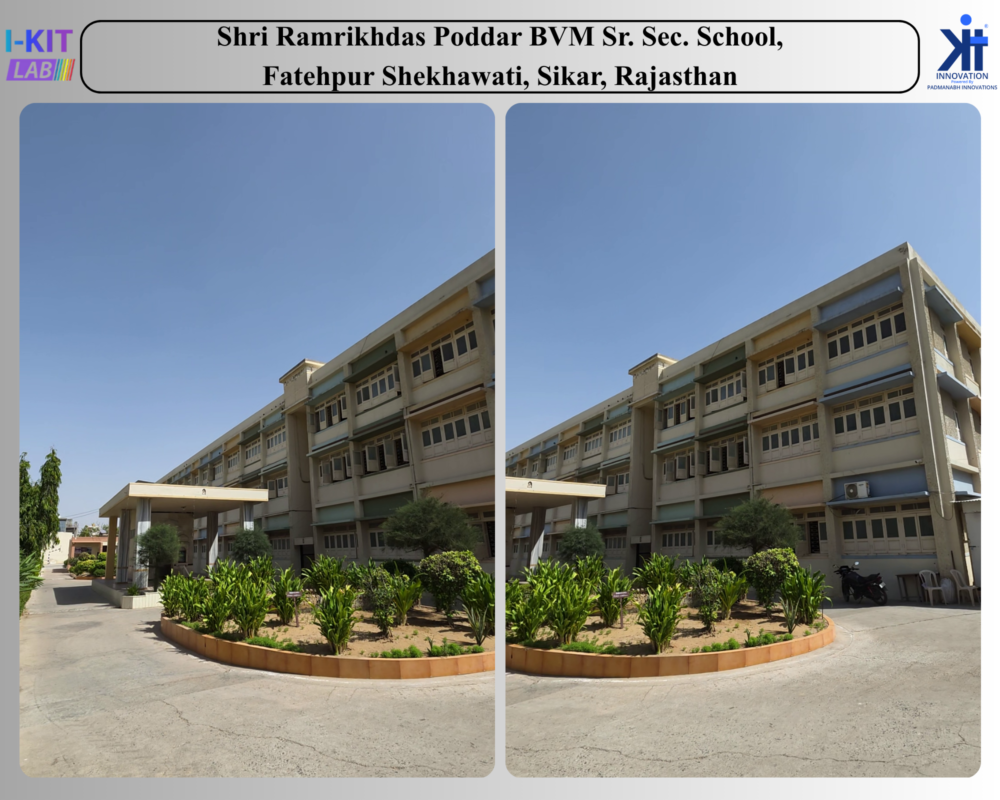
From Classroom Concepts to Real-World Learning: A Case Study from Shri Ramrikhdas Poddar BVM Sr. Sec. School, Fatehpur Shekhawati, Sikar, Rajasthan
A wonderful example of this evolving approach to education can be seen at Shri Ramrikhdas Poddar BVM Senior Secondary School, Fatehpur Shekhawati, where students were provided opportunities to experience learning beyond textbooks through hands-on STEAM activities conducted in collaboration with I-KIT Lab.
During the program, students explored concepts of science, engineering, innovation, and emerging technologies through engaging activities such as Hydro Rocket Launches and Drone Technology Learning Sessions. These experiences transformed classroom concepts into practical learning opportunities, allowing students to observe scientific principles in action while developing curiosity, creativity, teamwork, and problem-solving skills.
The enthusiasm displayed by the students demonstrated how experiential learning can make education more meaningful, engaging, and future-focused.
Three Pillars That Can Never Be Replaced:
This evolution in education does not mean moving away from academics. In fact, three pillars of learning can never be replaced:
- A School
- A Teacher
- Books
Technology can support learning, but it cannot replace the guidance of a dedicated teacher, the culture of a school, or the depth of understanding developed through books.
The goal is not to replace traditional education but to strengthen it by connecting classroom learning with real-world experiences.
Beyond Learning Concepts:
One of the most significant changes in modern education is the shift from simply learning concepts to experiencing concepts.
Students understand ideas more effectively when they can observe, experiment, and apply what they learn. Activities that encourage exploration, innovation, and hands-on problem-solving help students develop a deeper understanding of academic subjects.
This is where STEAM Education plays an important role by connecting Science, Technology, Engineering, Arts, and Mathematics through practical learning experiences.
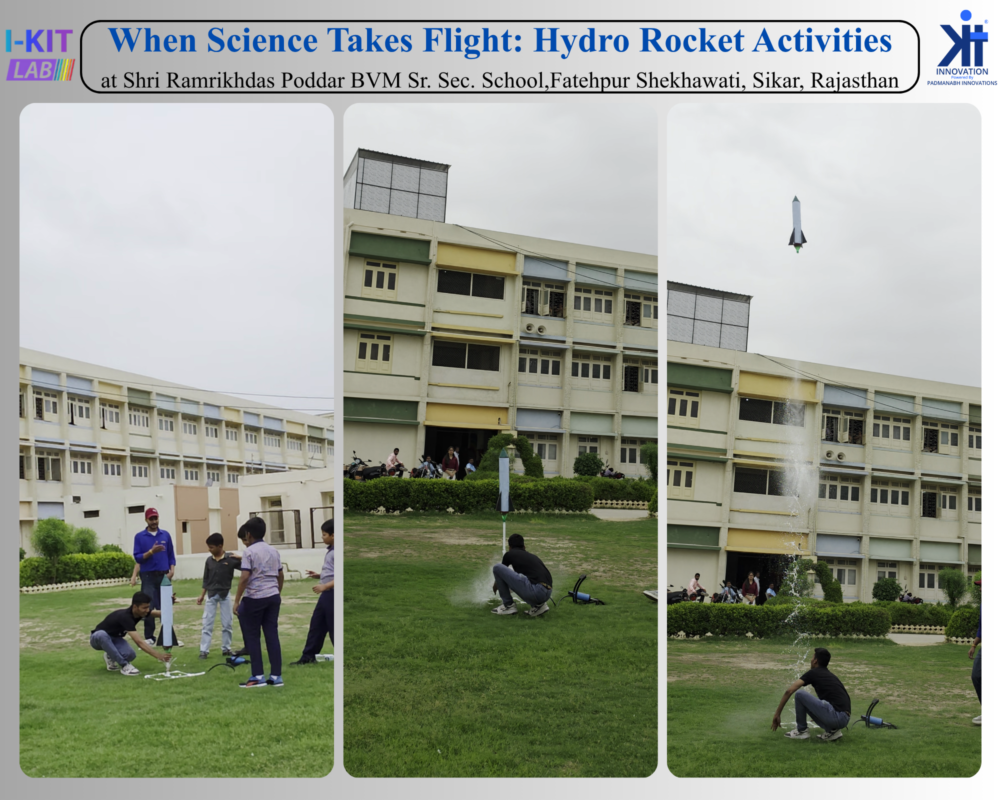
When Science Takes Flight: Hydro Rocket Activities:
Consider a lesson on Newton’s Laws of Motion.
Students can learn the theory from textbooks, but the learning experience becomes far more powerful when they design and launch a Hydro Rocket.
During the activity, students observe concepts such as pressure, force, motion, trajectory, and aerodynamics in action. More importantly, they begin asking questions:
Why did one rocket fly higher?
How does water pressure affect performance?
What changes improve stability?
Such experiences transform students from passive learners into active explorers and problem-solvers.
At Shri Ramrikhdas Poddar BVM Sr. Sec. School, students experienced these concepts firsthand through Hydro Rocket activities, where they designed, launched, observed, and analyzed rocket performance while applying classroom knowledge to a real-world challenge.
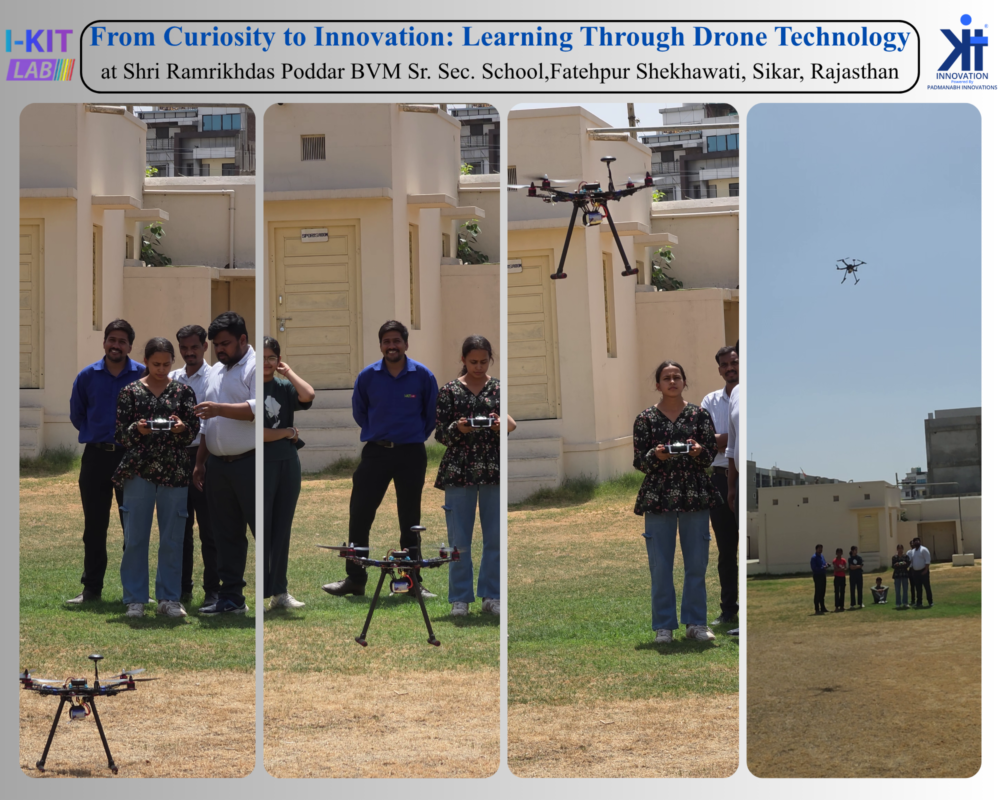
From Curiosity to Innovation – Exploring the Future Through Drone Technology:
Drone technology is another excellent example of how modern learning can connect classroom concepts with real-world applications.
While students may initially see a drone as an exciting flying machine, they soon discover the science and technology behind it.
Through drone-based learning, students are exposed to:
- Aerodynamics
- Flight Control Systems
- Electronics
- Sensors
- Programming Concepts
- Artificial Intelligence Applications
- Problem Solving and Decision Making
These experiences help students understand how different subjects work together in practical situations while also introducing them to technologies shaping the future.
Developing Future-Ready Skills:
The future will require much more than academic knowledge alone.
Students need opportunities to develop:
- Critical Thinking
- Creativity
- Communication Skills
- Collaboration
- Innovation Mindset
- Computational Thinking
- Adaptability
- Digital Literacy
These skills are best developed when students engage in meaningful projects, challenges, experiments, and innovation-driven activities.
Whether it is a Hydro Rocket launch, a Drone Activity, a Robotics Challenge, or a Design Thinking project, every experience contributes to building confidence and real-world problem-solving abilities.
The Evolving Role of Schools:
Today’s schools are evolving from being centers of knowledge delivery to becoming environments where students learn how to think, create, innovate, and solve problems.
Strong academics will always remain essential. However, schools that successfully combine academic excellence with experiential learning are better positioned to prepare students for the opportunities and challenges of the future.
As technology continues to transform the world, schools have an important opportunity to nurture curiosity, creativity, and innovation while preserving the timeless value of teachers, books, and meaningful learning experiences.
Looking Ahead:
The experience at Shri Ramrikhdas Poddar BVM Sr. Sec. School, Fatehpur Shekhawati reflects how schools are successfully blending strong academic foundations with experiential learning opportunities. By exposing students to activities such as Hydro Rockets and Drone Technology, schools are helping learners develop not only knowledge but also the curiosity, confidence, and future-ready skills needed in a rapidly changing world.
As education continues to evolve, such initiatives remind us that the future of learning lies not in choosing between academics and innovation, but in bringing them together to create meaningful learning experiences for every student.
After all, the schools that inspire curiosity today are the schools that will shape the innovators, problem-solvers, and leaders of tomorrow.
Education is evolving, but its foundation remains unchanged: Schools, Teachers, and Books.
The real opportunity lies in combining strong academic learning with meaningful experiences that help students explore, question, create, and innovate.
We are grateful to Shri Ramrikhdas Poddar BVM Sr. Sec. School, Fatehpur Shekhawati and the young learners who participated with such enthusiasm in the Hydro Rocket and Drone Technology activities.
We would love to hear from educators, school leaders, and parents:
What do you believe is the most important skill students should develop to succeed in the future?
A very relevant and timely perspective.
Schools, teachers, and books will always remain the foundation of learning. The real opportunity lies in connecting academic concepts with hands-on experiences that inspire curiosity, creativity, and innovation.
Well articulated.