EDUCATION

Hands-On Learning Tracks

  • Introduction to Mechatronics and Automation
  • Mechanical Systems, Gears and Motion
  • Sensors, Actuators and Controllers
  • Microcontrollers, PLCs and Embedded Systems
  • Electrical & Electronics Integration
  • Programming – C, Python, MATLAB
  • Control Systems and Simulation
  • Robotics, CNC and Smart Manufacturing
  • Logic building,
  • Computational Thinking
  • 
Math with Coding

  • Machine learning (ML)
  • Deep learning (DL)

  • Natural Language Processing (NLP)
  • 
Generative Al
Computer Vision
  • Pre-built robots & Modular robots
  • Simple programmable robots
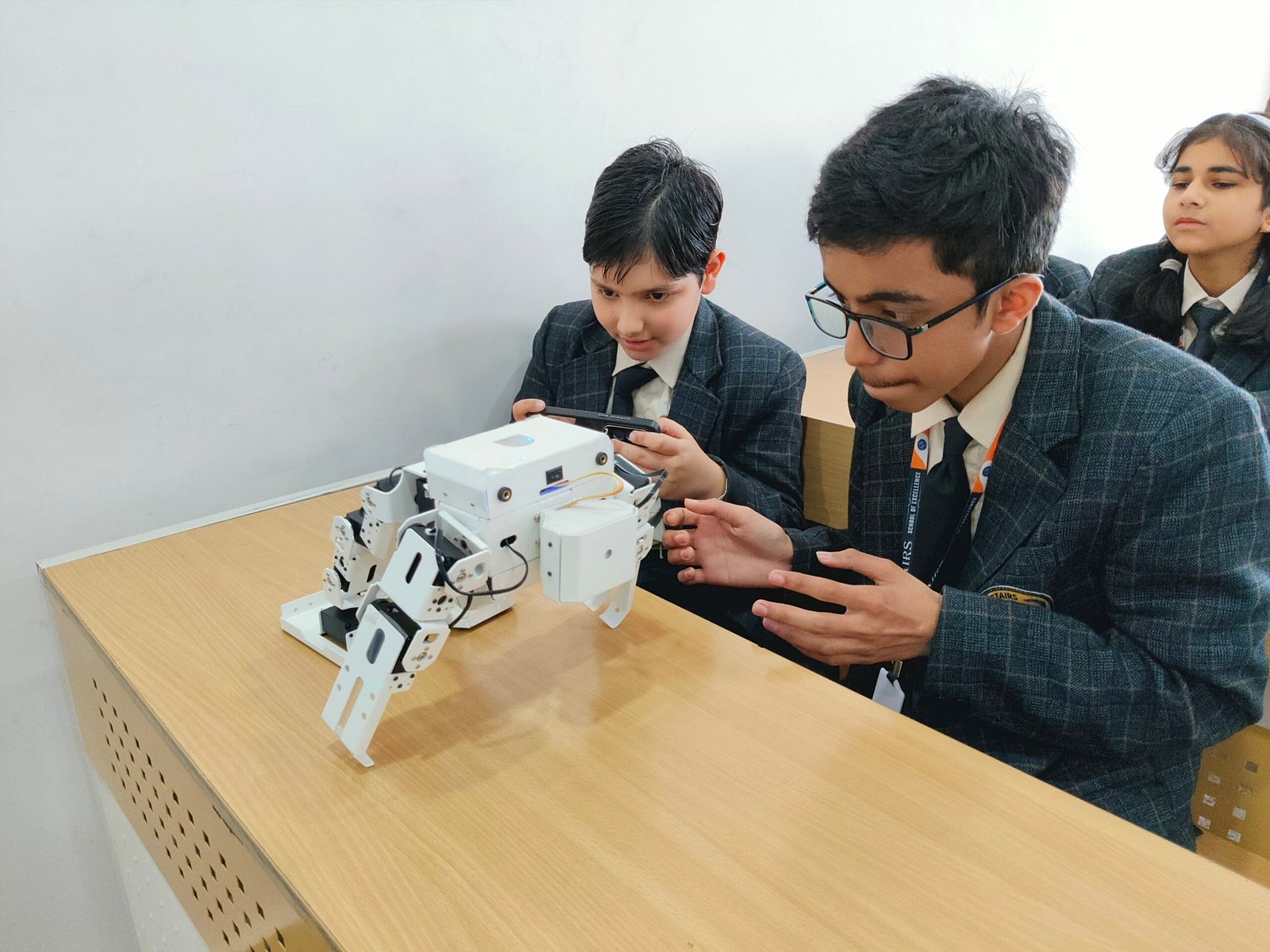
  • Robotic arms, Gesture-controlled robots
  • Maze-solving robots
  • Voice-controlled robots
  • Bipedal or hexapod robots
  • Autonomous delivery robots
  • Drones and RC Plane
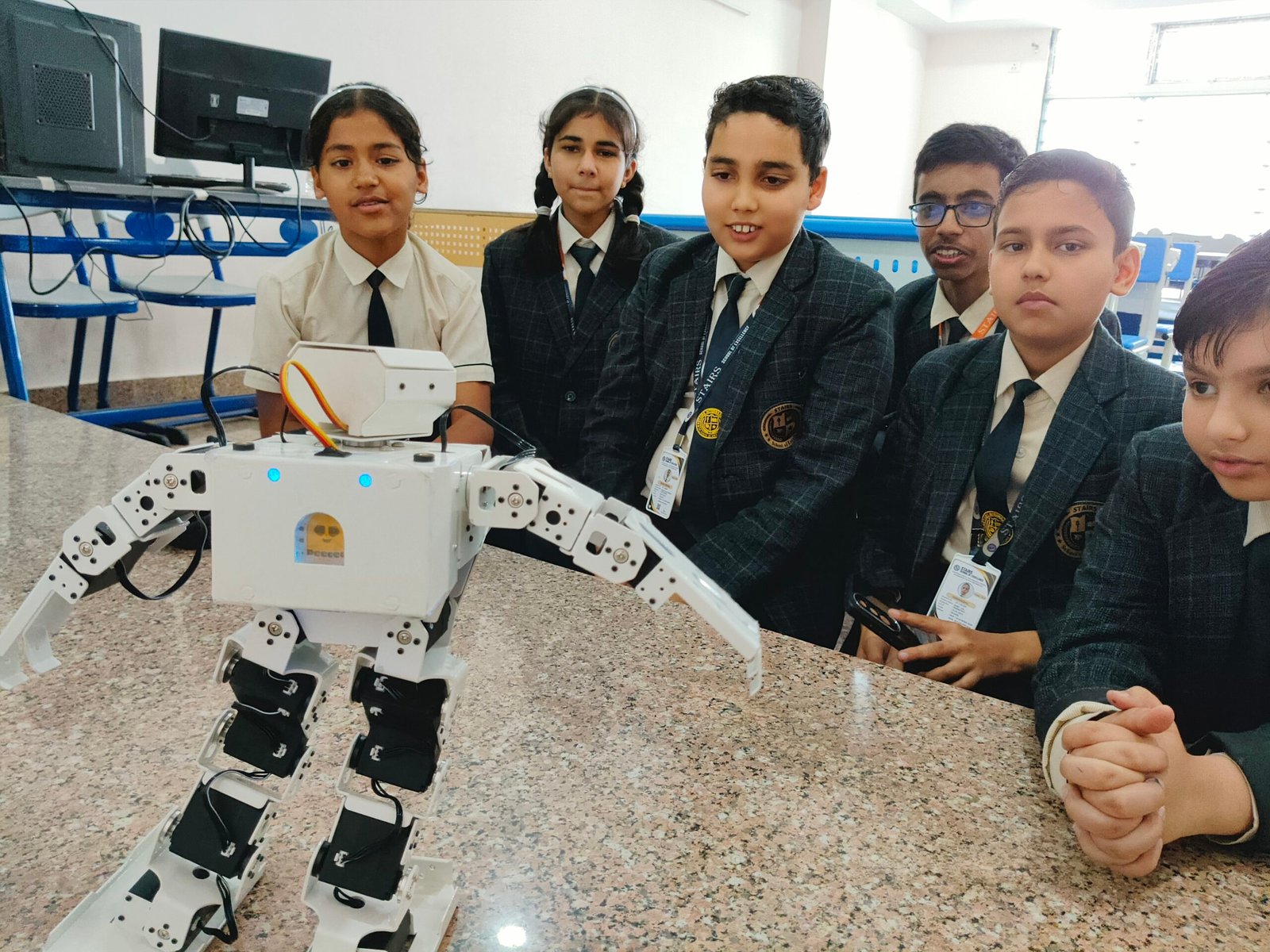
  • Humanoid robot
#image_title

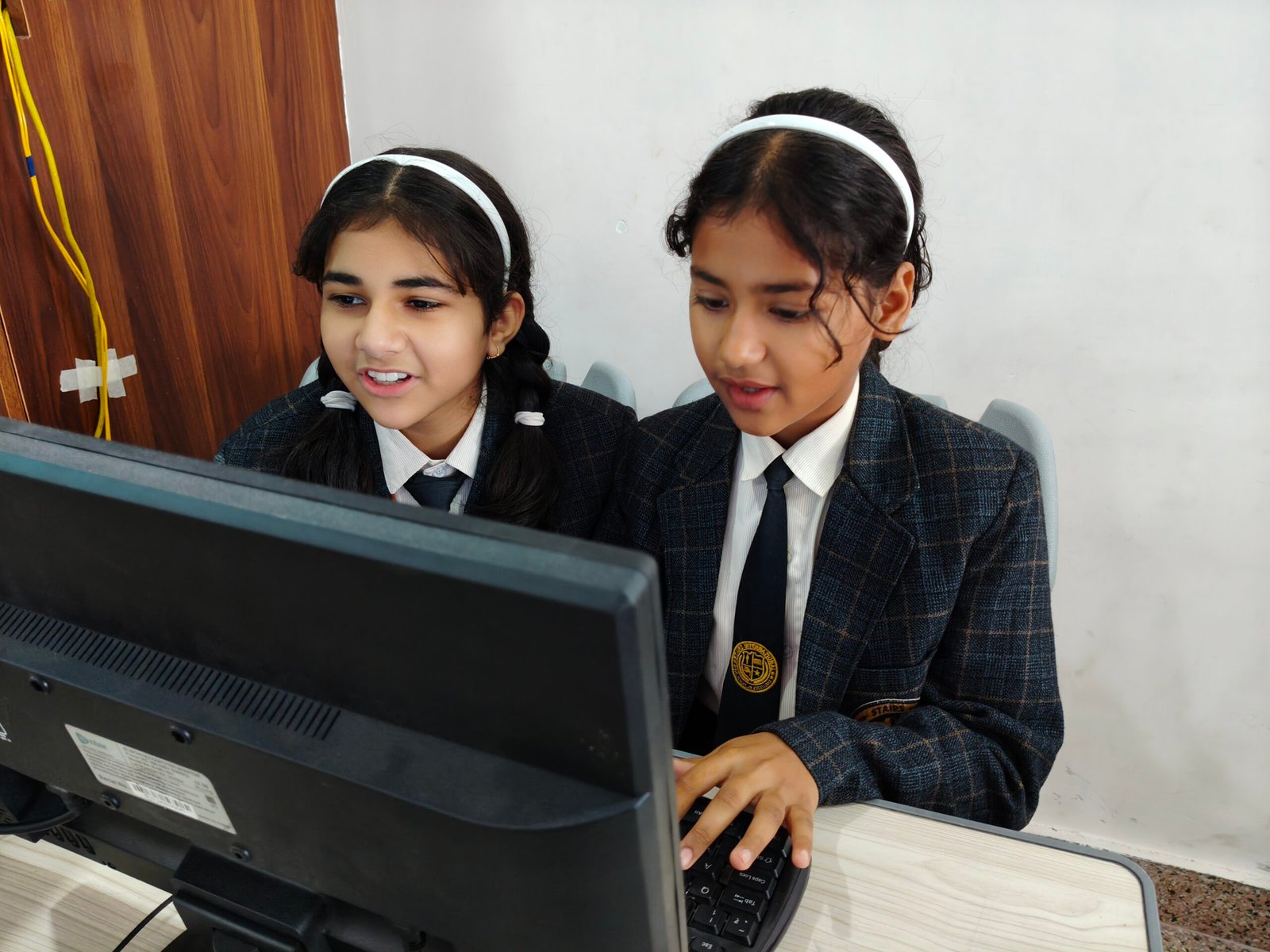
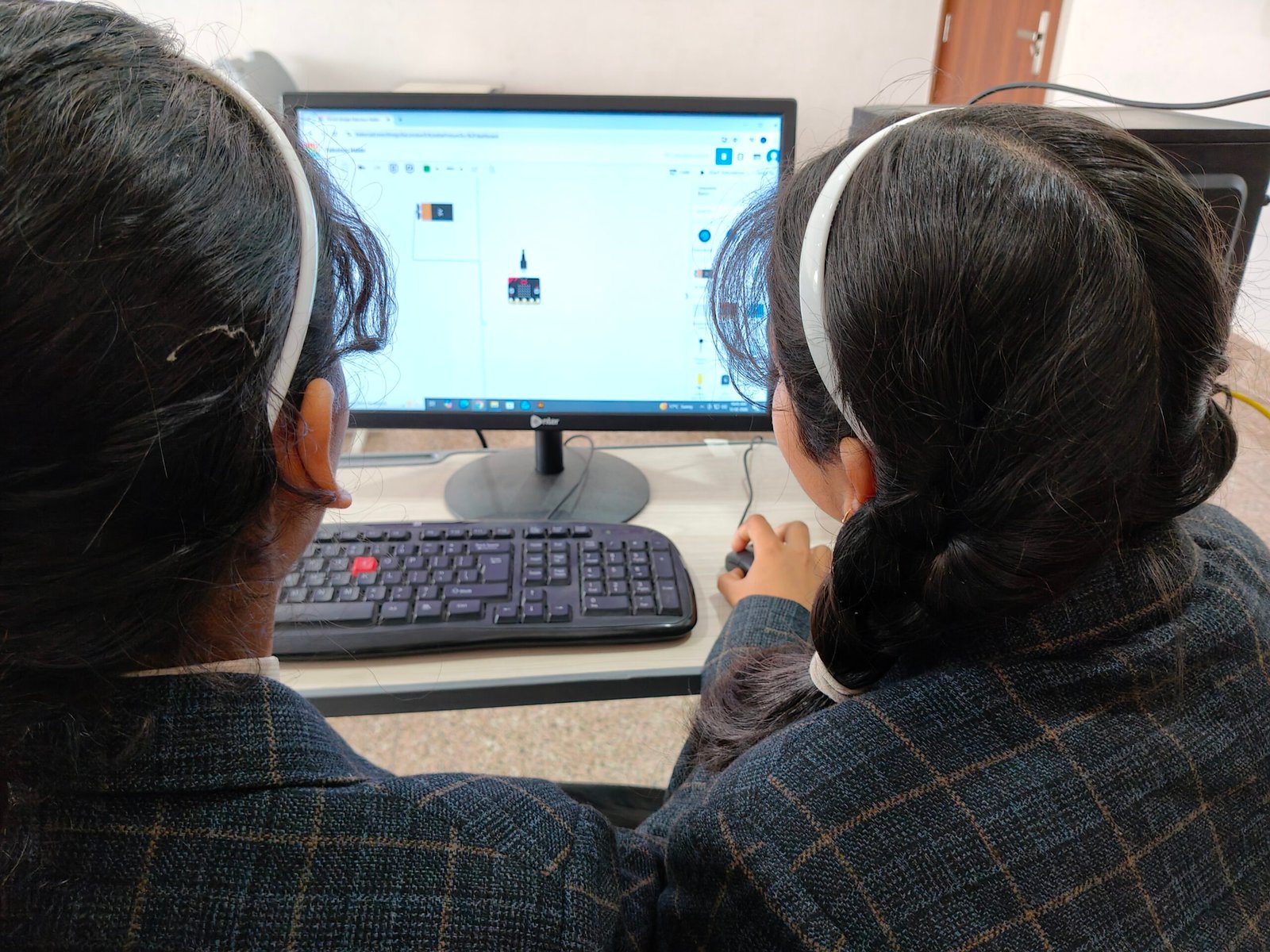
Students learn Mechatronicas and Automation, including mechanical systems, sensors, actuators, microcontrollers, and PLCs. They also explore programming, control systems, robotics, CNC, and smart manufacturing.

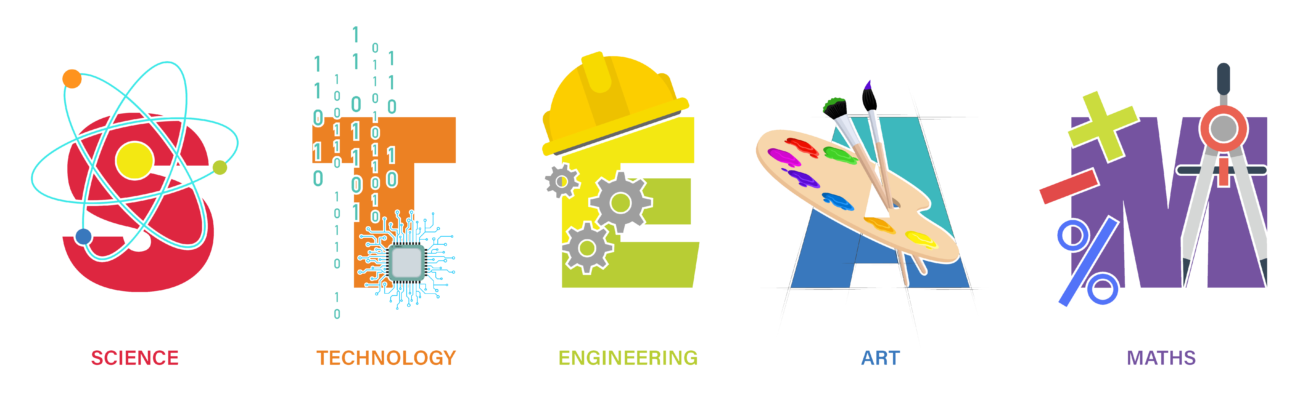
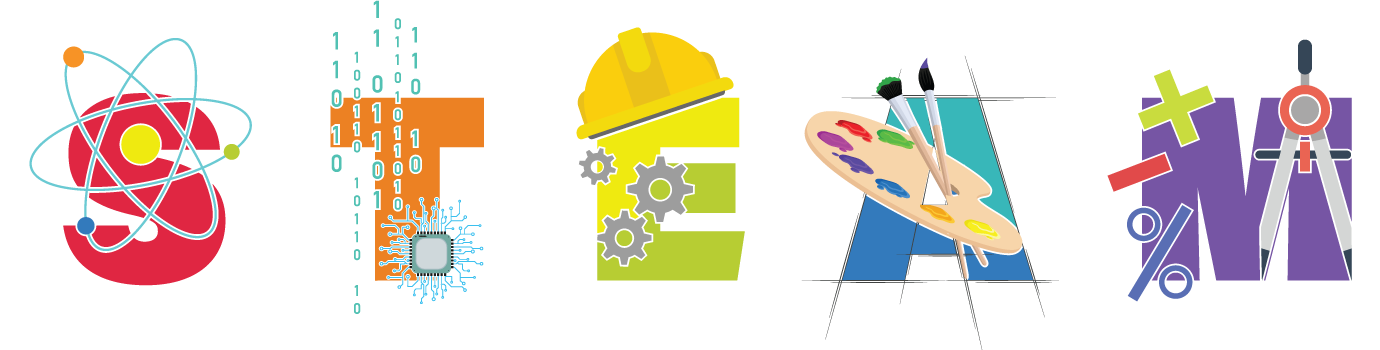
STEAM (Science, Technology, Engineering, Art, and Mathematics) is an integrated learning approach where students experiment, create, and innovate instead of just studying theory. It develops creativity, critical thinking, and problem-solving skills, preparing students to become future innovators and leaders.

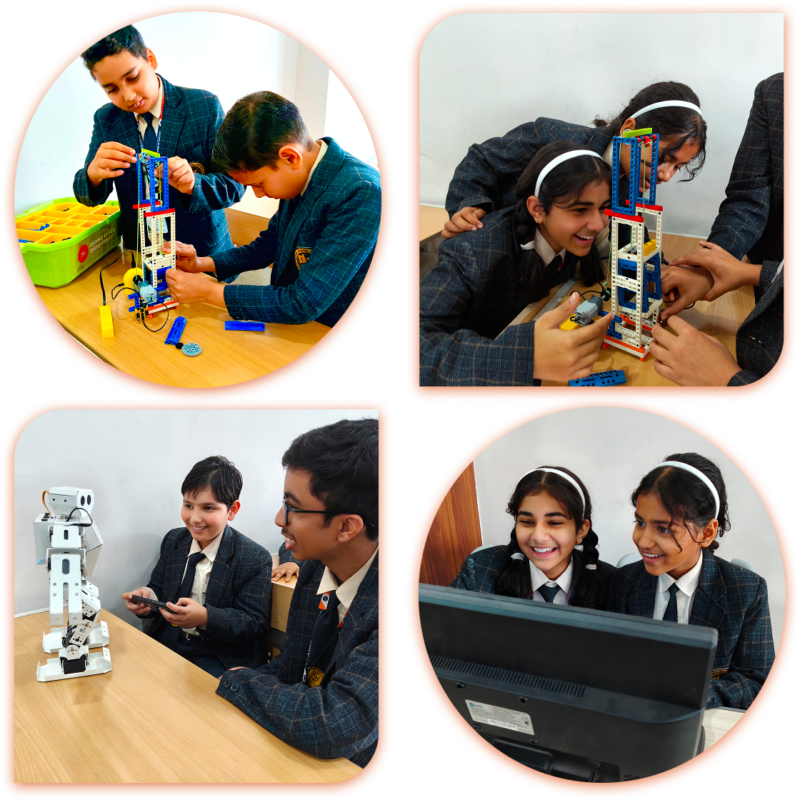
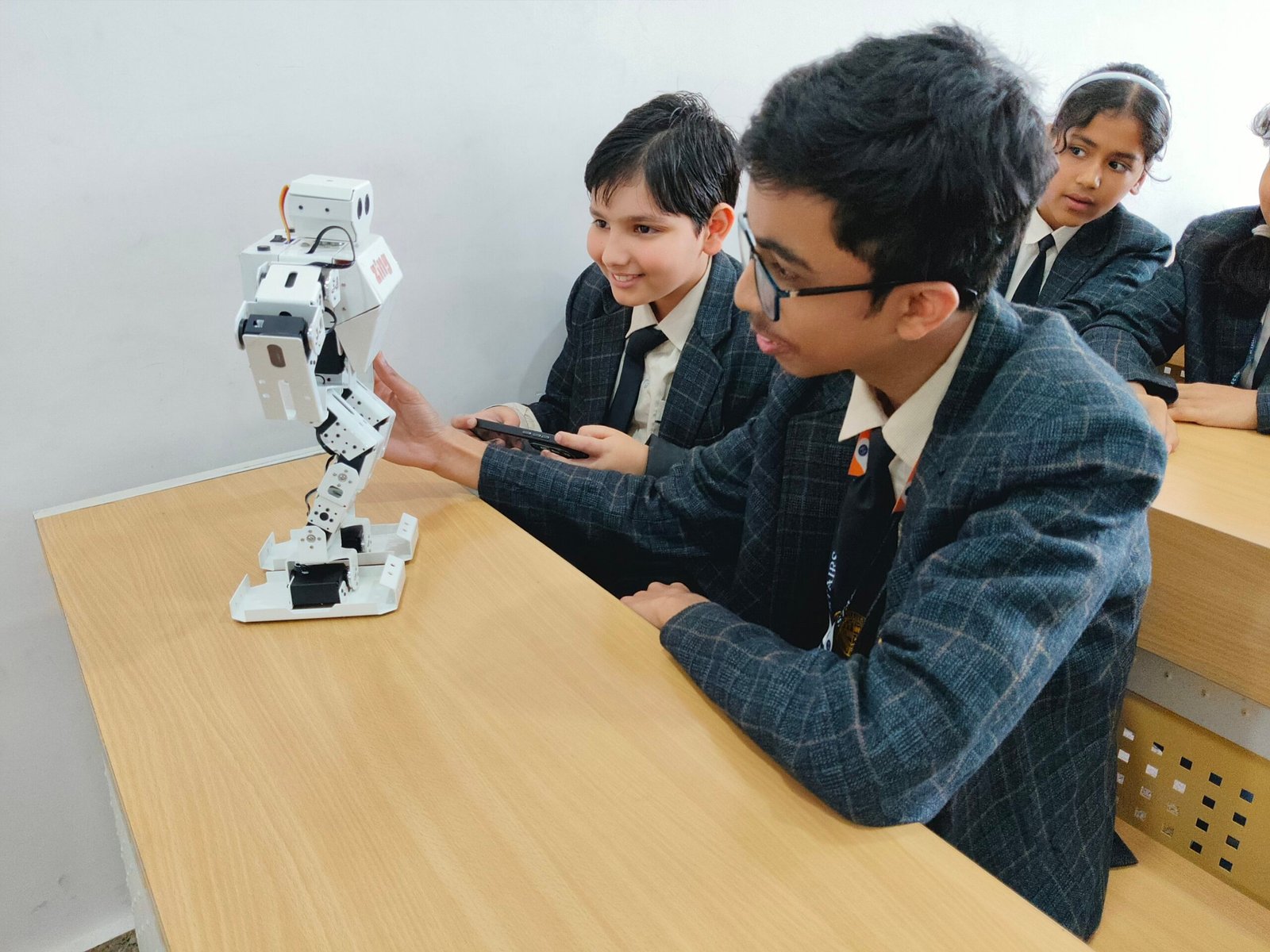
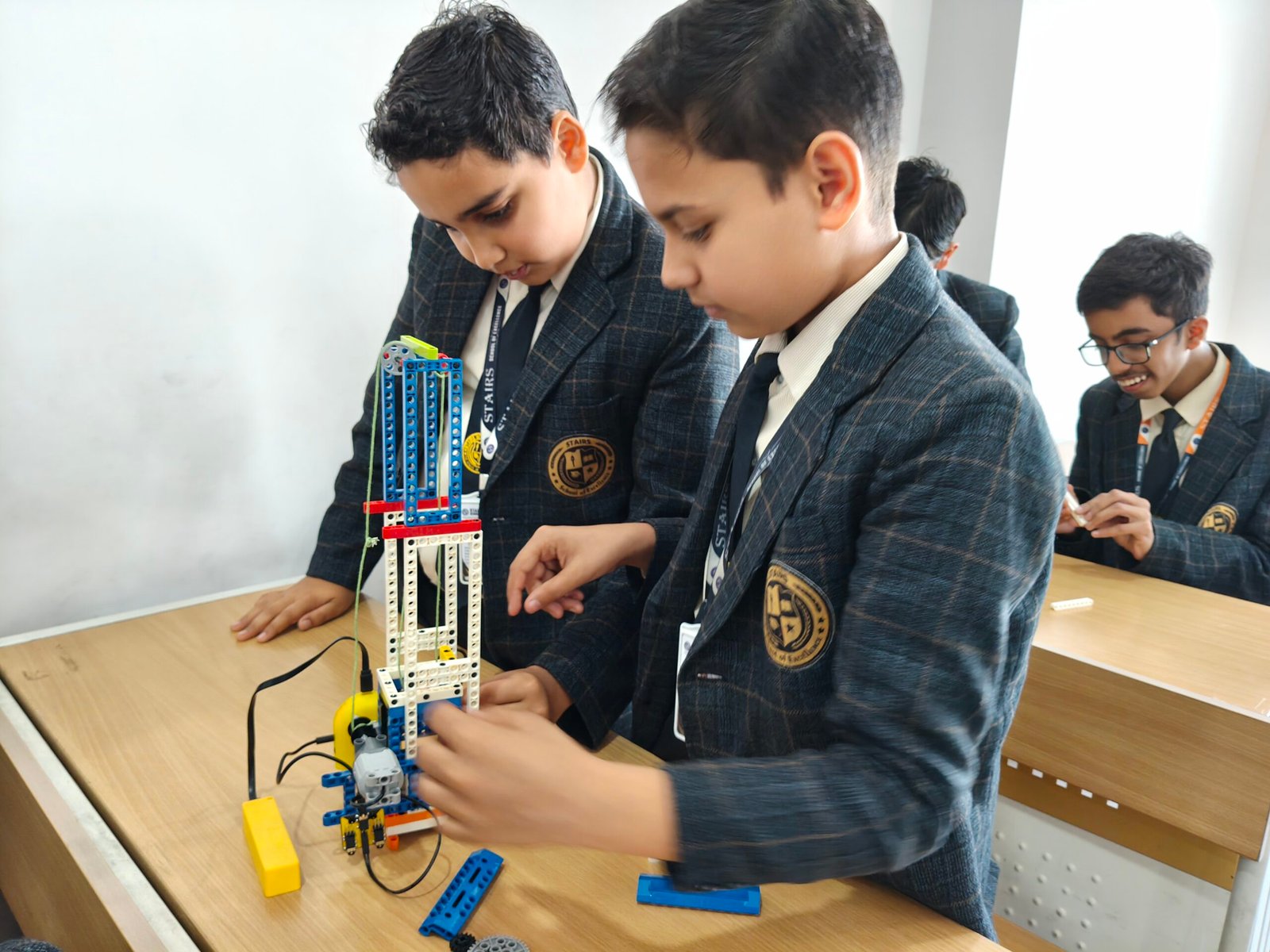
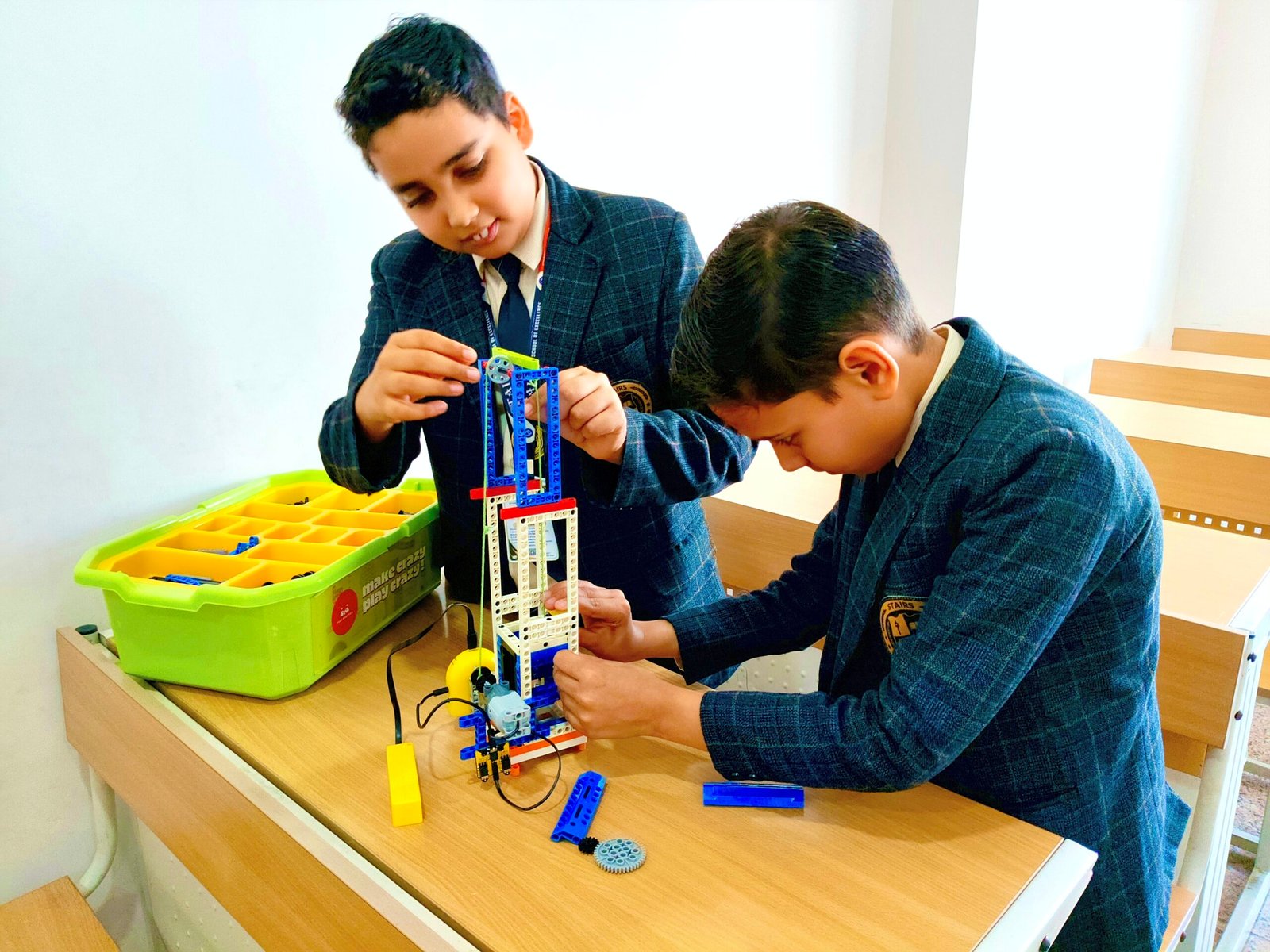
Students work with pre-built and modular robots to understand the basics of robotics and programming. They explore projects like programmable robots, robotic arms, gesture and voice-controlled robots, maze-solving robots, bipedal and hexapod robots, autonomous delivery robots, drones, RC planes, and humanoid robots, gaining hands-on experience with real-world robotic technologies.

Students build logic and computational thinking skills while learning Math with Coding. They also explore modern technologies like Machine Learning, Deep Learning, Natural Language Processing, Generative AI, and Computer Vision, helping them understand how intelligent systems work in the real world.

STEAM EDUCATION

Learning Beyond Classroom

STEAM (Science, Technology, Engineering, Art, and Mathematics) is more than just a curriculum—it is an integrated approach to learning that prepares students for real-world challenges. At our STEAM Lab, students don’t just study theories; they experiment, create, and innovate, making learning exciting and meaningful.

Together, Science, Technology, Engineering, Art, and Mathematics create a holistic learning experience. STEAM education equips students with creativity, critical thinking, and problem-solving skills—preparing them to become innovators, change-makers, and leaders of tomorrow.

 Pillars of STEAM

Each pillar plays a vital role in delivering a complete, future-ready education at Stairs School of Excellence.

 SCIENCE

In the Science section, students unlock the secrets of nature by exploring fascinating concepts like gravity, force, inertia, and Newton’s laws of motion. They dive into the world of electricity, conductors, magnets, optics, mirrors, lenses, and waves, while also discovering the wonders of the circulatory system, bio diversity, anatomy, food science, agriculture, the environment etc. Through hands-on experiments- connecting main stream education with the real world.

 TECHNOLOGY

Technology is the bridge between creativity, out of box thinking, and innovation. Working together and finding new solution/process for real-world problems. They discover the impact of technology on building a sustainable future, exploring topics such as renewable energy, resilient agriculture, biomimicry, and green innovations.
Through project designing and process development, students experiment with new-age technologies, learning how creativity and digital tools can transform ideas into practical solutions for society.

 ENGINEERING

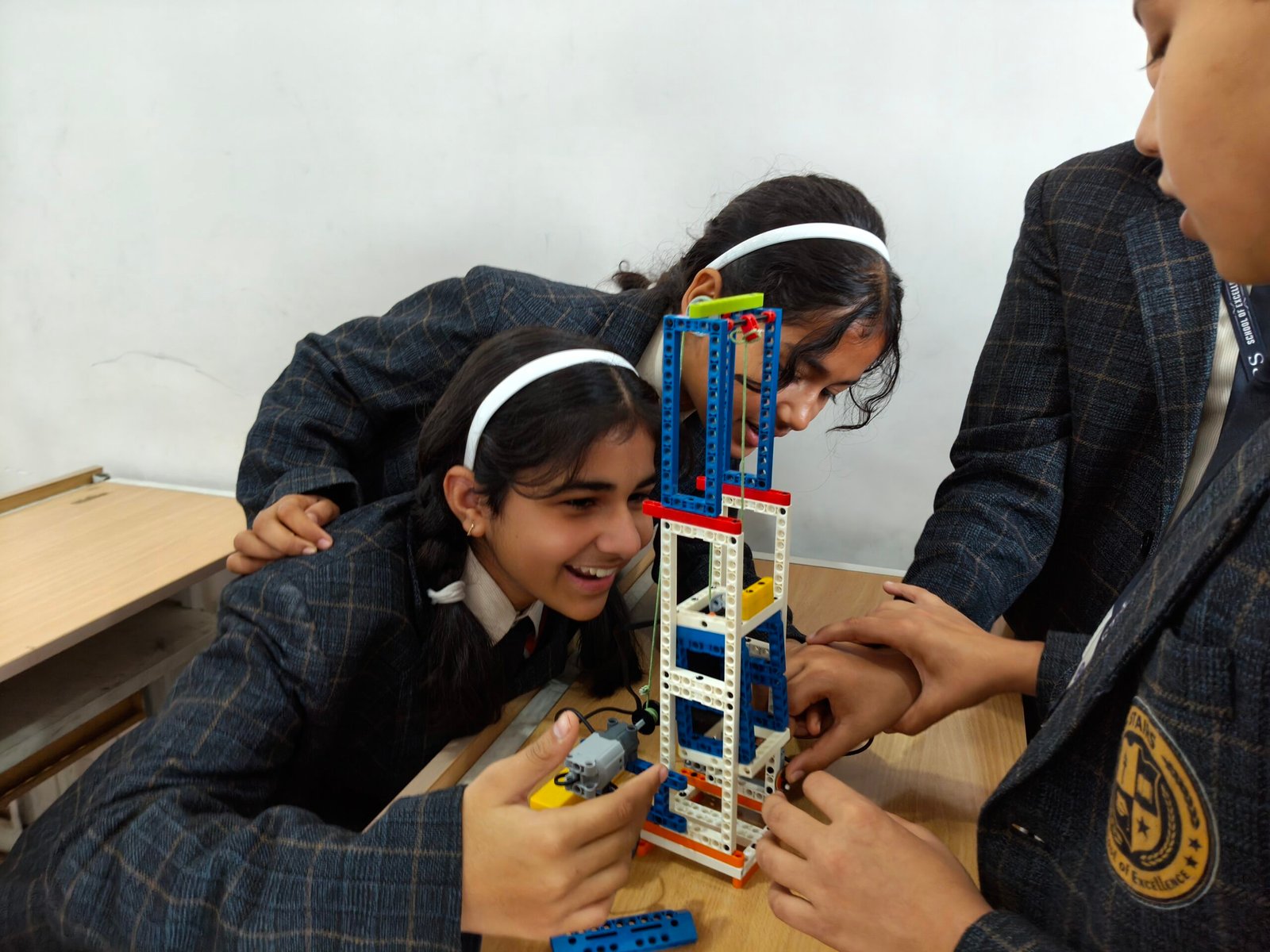
Engineering is where imagination turns into reality. Students design, build, and test models while applying real-world principles of structures, mechanics, and energy. From simple machines to complex prototypes, they learn to brainstorm, collaborate, and innovate.
Every project encourages teamwork and problem-solving, leading students to create functional engineering products that combine creativity, innovation, and sustainability.

 ART & MATH

Art and Mathematics together spark creativity and logic. Students explore design, visual arts, 3D modeling, and craftwork while applying maths concepts like geometry, symmetry, patterns, and proportions. By blending imagination with precision, they create functional and visually appealing models—building both problem-solving and creative expression skills for innovation.

DELVERY MECHANISM

Three Tiered Delivery Approach

 Enquiry Based Learning

Every topic starts with an application-focused question, engaging students with lab materials.

 DIY Kits

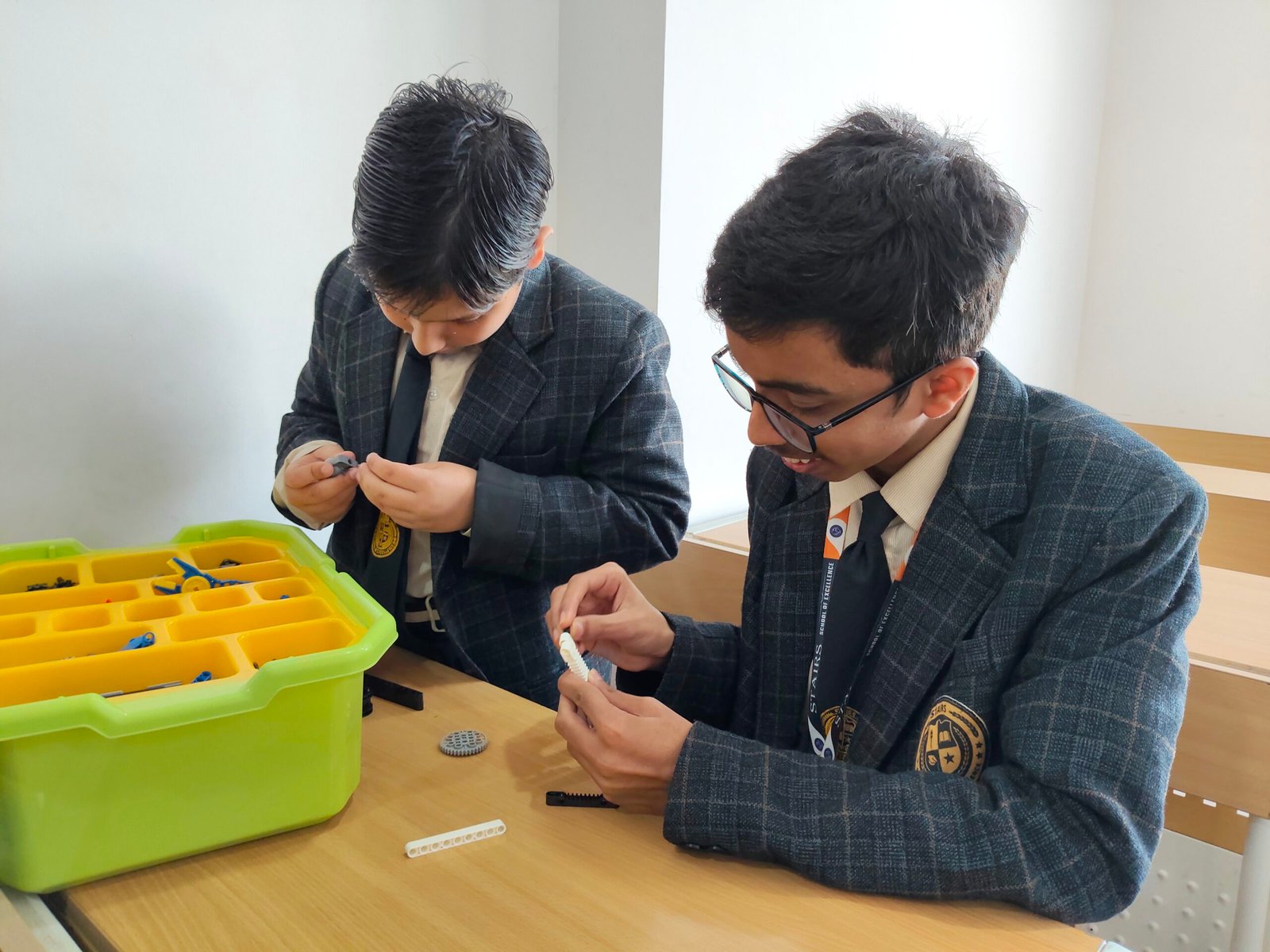
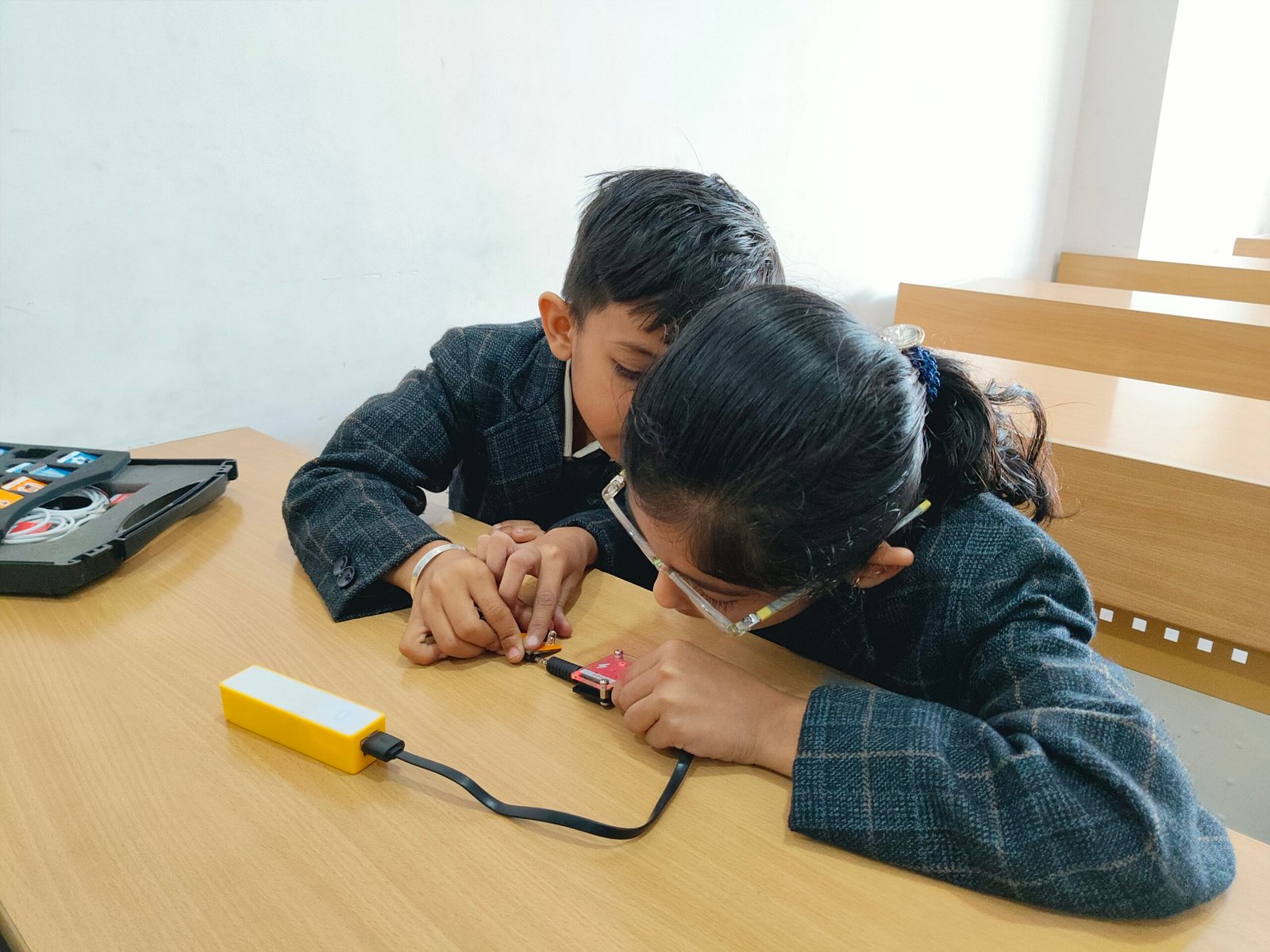
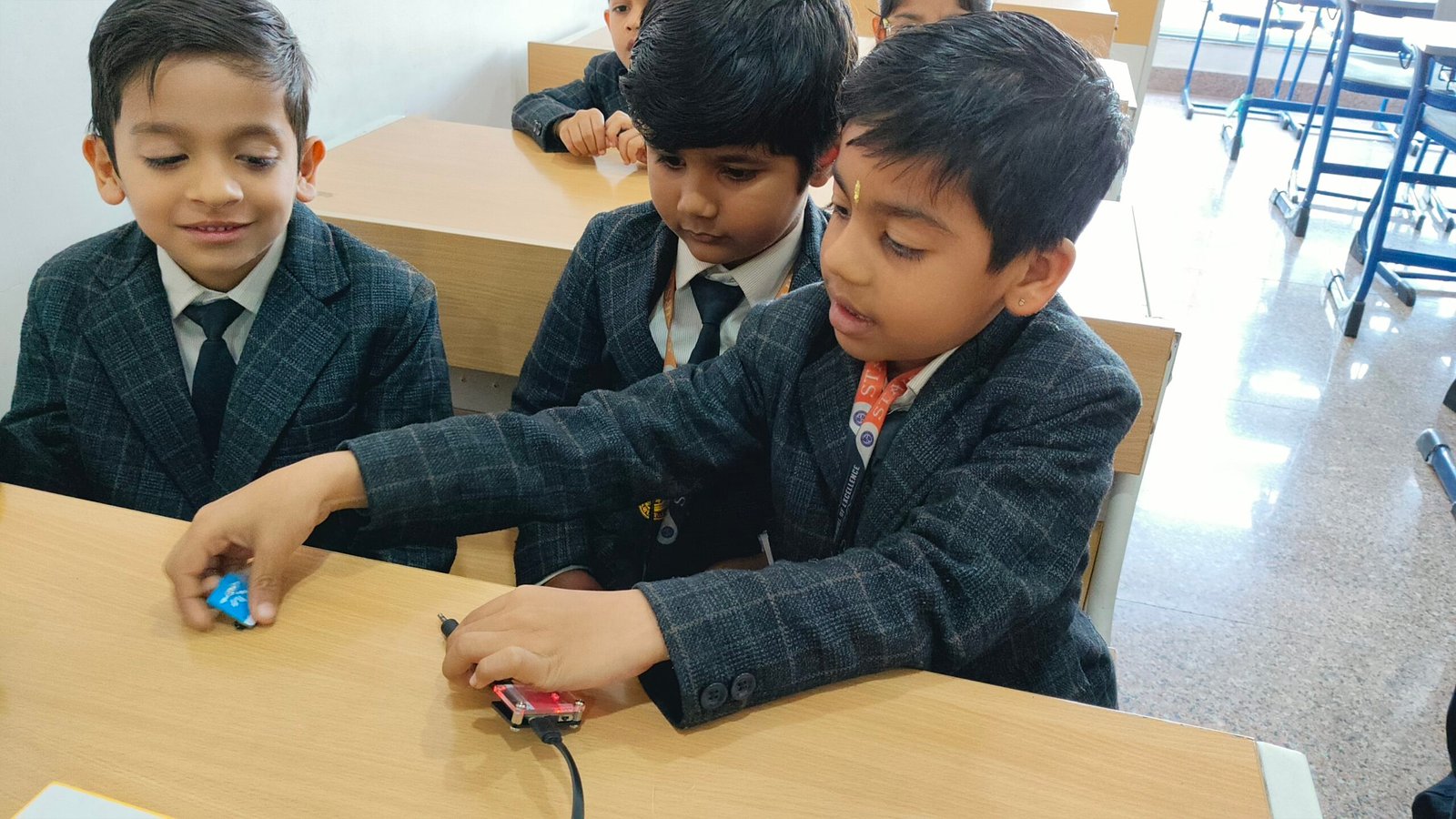
Students experiment with DIY kits to collect data, formulate observations, and interpret findings.


 Project Based Learning

Students build projects addressing real-world problems by fusing Art, Math, Science, and Technology.

 Student Benefits

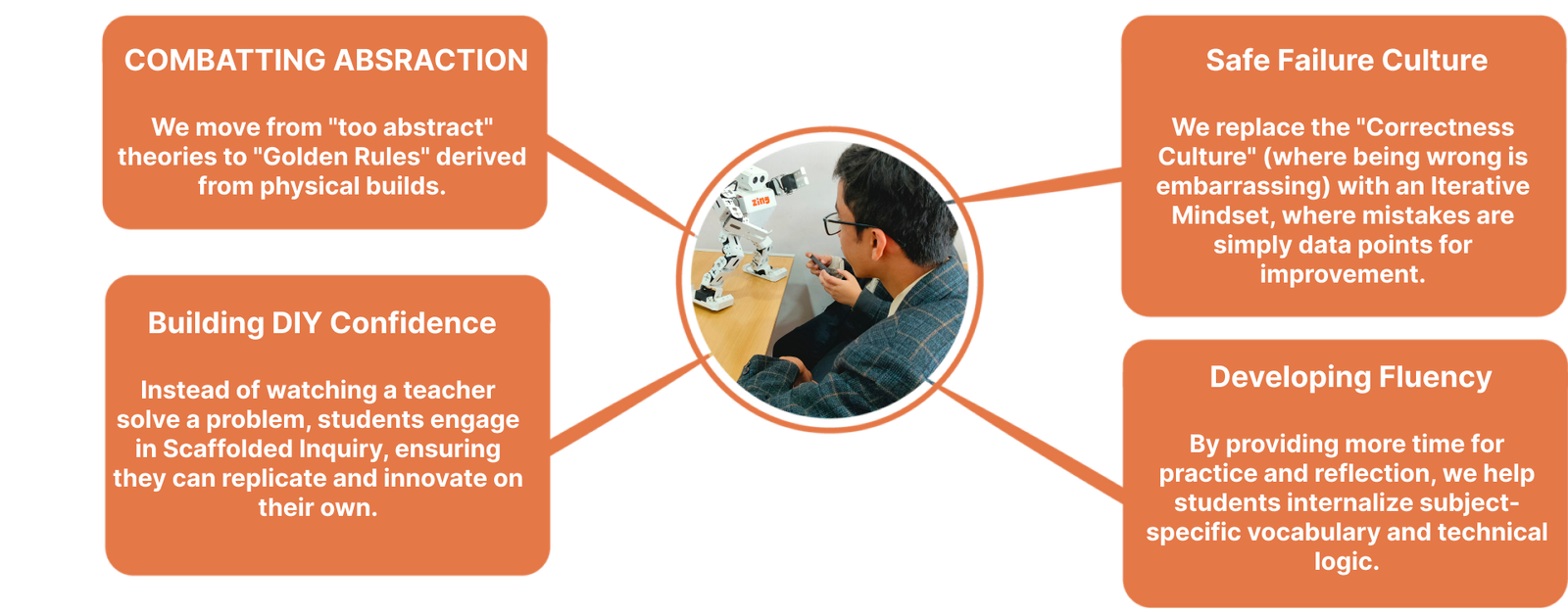
Addressing the  “Silent Struggles” of Students

#image_title

Addressing the "Silent Struggles" of Students

Combatting Abstraction

We move from "too abstract" theories to "Golden Rules" derived from physical builds.

Safe Failure Culture

We replace the "Correctness Culture" (where being wrong is embarrassing) with an Iterative Mindset, where mistakes are simply data points for improvement.

Building DIY Confidence

Instead of watching a teacher solve a problem, students engage in Scaffolded Inquiry, ensuring they can replicate and innovate on their own.

Developing Fluency

By providing more time for practice and reflection, we help students internalize subject-specific vocabulary and technical logic.
Play Video

Learning Outcomes From STEAM Education

  • Holistic Education Approach: The school emphasizes experiential learning, integrating practical activities with classroom teaching to make concepts more engaging and memorable.
  • Interdisciplinary Learning: By blending Science, Technology, Engineering, Arts, and Mathematics, the school fosters a well-rounded approach to innovation and problem-solving.
  • Critical Thinking Culture: Students are encouraged to tackle challenges that develop analytical and problem-solving skills essential for real-world success.
  • Future-Ready Education: The school prepares learners for upcoming career opportunities by introducing them to modern tools, technologies, and methodologies.
  • Confidence and Growth: Participation in projects and activities builds self-confidence, enhances creativity, and strengthens students’ overall personality.
  • Guidance and Mentorship: Teachers and mentors provide personalized support, ensuring the academic and personal growth of every student.
  • Active Learning Resources: With DIY kits and activity-based learning, the school promotes hands-on engagement that deepens understanding and improves long-term retention.

Transforming Education Through STEAM Learning

Education is rapidly evolving, and schools must prepare students for future technologies. Therefore, the introduction of the I-KIT STEAM Lab at Stairs School of Excellence Kota represents a major step toward experiential learning. Unlike traditional classrooms, this lab allows students to explore scientific concepts through practical experiments and real-world projects.

Moreover, STEAM education integrates Science, Technology, Engineering, Arts, and Mathematics into a unified learning model. As a result, students not only understand theoretical concepts but also learn how to apply them in real-life situations. In addition, this interdisciplinary approach encourages creativity, innovation, and critical thinking among young learners.

Hands-On Innovation and Project-Based Learning

Students in the I-KIT STEAM Lab actively participate in project-based learning. For example, they build robotics models, design engineering structures, and experiment with electronics and automation systems. Furthermore, these hands-on activities help students understand complex scientific principles in an engaging way.

Additionally, working on collaborative projects improves teamwork and communication skills. Consequently, students gain confidence while presenting their ideas and prototypes. Most importantly, this process encourages curiosity and motivates students to explore advanced technologies.

Preparing Students for Future Technologies

Technology is shaping every industry today. Therefore, schools must introduce students to emerging fields such as Artificial Intelligence, Robotics, and Internet of Things. Similarly, coding and engineering concepts help students develop logical thinking and computational skills.

As a result, students become better prepared for careers in science, engineering, and technology. Meanwhile, exposure to innovation at an early age helps them discover their interests and talents. Ultimately, this prepares them to become creators and innovators rather than just consumers of technology.

A Future-Ready Learning Environment in Kota

The I-KIT STEAM Lab at Stairs School of Excellence Kota creates a dynamic learning ecosystem. Not only does it enhance academic understanding, but it also develops essential 21st-century skills. In addition, the lab aligns with modern education practices that emphasize creativity, collaboration, and problem-solving.

Finally, this initiative ensures that students receive a future-ready education that prepares them for the rapidly changing technological world.